- News
- entertainment
- english
- hollywood
- Children are very clued in: Markus Schleinzer
Trending
This story is from March 19, 2012
Children are very clued in: Markus Schleinzer
Markus Schleinzer, director of 'Michael', believes that one mustn't underestimate children as they are a lot more clued in than we choose to believe, or think them capable of being.
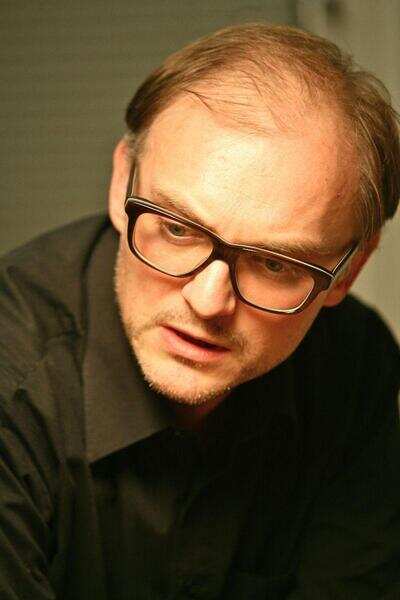
Markus Schleinzer, director of 'Michael', believes that one mustn't underestimate children as they are a lot more clued in than we choose to believe, or think them capable of being.
How did you get the idea to make a film like this?
My thoughts kept returning over the past few years to the way that perpetrators and the notion of the perpetrator are dealt with in public. And there is scarcely a crime in this discourse that is so flatly condemned as child abuse. It is one of society's greatest crimes, such that even sterling citizens who feel strongly about the law would love to return to mediaeval justice and start to wish all manner of things for the accused. IOffenders get to be stylised as monsters in the media...
The yellow press likes to work with catchy phrases like "the monster of ... " and so on. But monsters are not people - they are mythical creatures, something from fairy tales. So the offender is denied all humanity. Obviously the distance we have to assume to perpetrators is incredibly important. And the means we use to create this are arbitrary. Because it is simply a matter of making the distance between us and the people who acted in that way as large as possible. One doesn't want to have to look at someone like that, let alone be bracketed with them by perhaps being identified with them.We mostly look for inner and external factors, which allow us to pigeonhole others. But not necessarily to understand and fathom them, but rather to push them away from us. We always have the same formulaic approach, this compulsive search for "redemption" by means of psychological explanations, which are reinforced by inventing desolate biographies. I have consciously attempted to override this mechanism in Michael
. My main point was: I can only approach criminality of whatever kind if and when I acknowledge it, am on equal terms with it. I have to acknowledge his existence. That is not to say forgive, that I think is reserved for the victims. And judgement is done by the court.There is also a normal side to this offender's life...
What's it like when you live with someone under such conditions? For both of them? How is it when, after a certain time, the initial protests are over and the first difficulties in the adjustment phase have been negotiated? To our minds that is now a relationship. They have already been together, have got used to each other - what it's like? That's what I wanted to relate.And a certain kind of sexuality also appears because it is a part of this life together, which of course is totally steered by the perpetrator. But here again the perpetrator doesn't try to do anything but live according to a cliche picture of normality. He tries to be like everybody else. He makes a big effort to adhere to the rites of normality because that is what conceals his crime. I am interested in these self-created idylls, which are presented as "natural" and "normal " - because for me they also prise open the normality and everyday life that I live in.Knowing that in an extreme situation one needs and looks for normality, so that one can make this extreme situation viable and maintain it - that casts a special light on everyday life and the normality that goes with it. What does it mean for my normality - how much of it is simply self-protection and how much just hanging on to certainty?What I find interesting and also appalling in this film is not only that the perpetrator seeks normality, but that this normality doesn't even find him abnormal. He gets along perfectly at his work in an insurance company, even gets promoted, people value him, he gets invited on a ski trip and so on and so on. The "normal people" react towards him as if he were a totally normal person. That for me is one of the disconcerting and also alarming aspects of the film.
Even if abnormality is the opposite of normality, I don't think it permeates every area of life. The abnormal is just one facet. In Michael
the perpetrator's abnormality, his paedophilia, has driven him to abduct this child. But that is not something that makes him stand out, so that one would immediately back away from him. And then when, as is typical of such cases, the neighbours come running up and say "he was always such a nice person", they are attempting somehow to balance up the dysfunctional side with the functional one. This lack of comprehension - how can someone who once looked after my cats suddenly be abnormal? That seems quite improbable to us, because it endangers our own normality.Using a child for a film like this seems pretty daring.
The most important thing was total honesty. At one of the last castings one of the mothers got up and left because I couldn't promise her that I would be able to protect her child in the future. I cannot guarantee that the child who played the part will never be teased by his fellow pupils at school. I can't do that, it would be a lie to say I could. But we attempted to give the child the necessary tools by talking and discussing, speaking and also listening, so that he can also stand up for himself, be his own person in this topic. So the most important thing was to find parents who not only would let their son to play a role like this, but who would also be interesting discussion partners; and finding a child who had the right amount of talent and a healthy personality with both feet on the ground.I can't make a film about abuse and at the same time be guilty of abuse. That of course very much affects the child, because he plays the victim, but also the person who plays the perpetrator, Michael Fuith. It was really important that in the preparatory phase, we took a long hard look at who we are ourselves before beginning to talk about the characters.How does a ten year-old digest a story like this?
I have the advantage that I've already worked a lot with children. In particular The White Ribbon
by Michael Haneke was a big lesson. I wouldn't have dared take on Michael
if was still wet behind the ears. I have learnt that one must approach children and meet them there where they are, which is to say in their childlike reality. That was really important. So it was not a matter - particularly with such a topic - of dragging the child up into the world of adults.We talked quite openly with him and he developed certain strategies. I repeatedly gave him the chance to think for himself about what was going on in his character. What was also important was that he helped design his cellar room. He painted all of the pictures that are hanging in there.How was it for your lead, Michael Fuith?
Actually he should answer that. All I can say from what I saw was that he plunged himself totally into the story, that he did a great deal of research and that time and again it was doubtless difficult for him to open himself up to a person like that and to depict that figure, so that one could follow actions logically even if one can't condone them. He took this on with great honesty and his work was excellent, but I hope that his next role is something quite different.End of Article
Follow Us On Social Media








Tired of too many ads?go ad free now
entertainment videos
Featured In Movies

Tired of too many ads?go ad free now
Hot on the Web
Pancreatic CancerChest PainPeanut Butter BenefitsTiny DeerBrain ExercisesHeart AttackParent's Day WishesViineet KumarHeart ProblemSaiyaara Box Office CollectionKishore KumarLiver HealthHigh CholesterolHari Hara Veera Mallu Movie ReviewHeart ProblemMaareesan Movie ReviewHair LossThalaivan Thalaivii Movie ReviewGut HealthWalkingMedicationsHari Hara Veera Mallu Box Office CollectionParrotSkin ProblemArchana Puran SinghMaharashtra Glass SkywalkSaiyaara Movie ReviewBaby NamesWalking For Weight LossBad CholesterolFatty LiverHair LossSolar EclipseAnand MahindraFatty LiverHeart ProblemOne PieceBest Shounen AnimeNeck Pain TipsMonsoon Travel TipsChronic InflammationJeff Bezos
Trending Topics
Latest MoviesBollywood MoviesHollywood MoviesTamil Movies 2025Telugu Movies 2025Malayalam Movies 2025Kannada Movies 2025Marathi Movies 2025Bengali Movies 2025Top Rated Movies 2025Best Hindi MoviesBest English MoviesBest Telugu MoviesBest Tamil MoviesBest Malayalam MoviesBest Kannada MoviesBest Bengali MoviesUpcoming Hindi MoviesBest Movies Of All TimeBest Hindi Movies of All TimeLatest English MoviesLatest Malayalam MoviesEnglish TV NewsTamil TV NewsTelugu TV NewsMalayalam TV NewsKannada TV NewsMovie ReviewsBhojpuri Cinema NewsGujarati Cinema News
Popular Categories
Viral NewsK Pop NewsWeb Series NewsAnime NewsUpcoming English MoviesUpcoming Tamil MoviesUpcoming Telugu MoviesUpcoming Malayalam MoviesUpcoming Kannada MoviesFashion TipsTravel NewsEntertainment NewsBollywood NewsTollywood NewsKollywood NewsMollywood NewsFood NewsLatest Hindi MoviesLatest Tamil MoviesParenting TipsHome RemediesWeight LossBeauty TipsParenting TipsHindi VideosHindi Video SongsBhojpuri Music VideosLatest Telugu MoviesBhojpuri Music VideoHindi TV News
Latest News
Pickup truck carrying 25 people plunges into Sirhind Canal near Ludhiana; 4 deadAGR dues: DoT issues Rs 7,800cr demand notice to Tata CommRashmika Mandanna's film 'Mysaa' launched in Hyderabad with traditional ceremonyIND vs ENG: Ravindra Jadeja rewrites Test history, equals Garry Sobers' 59-year-old iconic record in EnglandDaily Career Horoscope, July 28, 2025: Predictions for All Zodiac SignsDaily Horoscope: Today's astrological predictions for July 28, 2025Setback to lenders: NCLT replaces RP in Anil Ambani's loan guarantee caseSidharth Malhotra visits Siddhivinayak Temple with mother; seeks blessings for newborn daughter and wife Kiara Advani: WATCHNHL Trade Rumor: LA Kings reportedly eyeing Connor McDavid amid growing uncertainty around Oilers’ long-term visionUkraine aid row: EU withholds $1.7 billion; Zelenskyy's new bill faces internal and external pressureGovernment identifies key sectors to attract foreign investorsPUBG Mobile World Cup 2025 Group Stage Day 3 Recap: Overall Standings, Final Qualifiers, Key Highlights, Complete Analysis, and MoreCincinnati shocker: Man stomped, woman knocked out in brawl; crowd jeers and filmsPriyanka Chopra, Nick Jonas attend ‘Aladdin’ Broadway show; daughter Malti melts hearts with her adorable 'chirag' moment: PICSAndal Jayanti 2025: Date, Puja Rituals and Significance of Aadi Pooram‘Saiyaara’ Box Office collection day 10: Ahaan Panday and Aneet Padda starrer soars on Sunday, Mohit Suri’s film earns Rs 247.25 crore in IndiaAre wedding bells ringing for Taylor Swift and Travis Kelce? Here’s what Jessica Benson had to sayIn just six months, Dubai’s transport system carried more people than the entire US population